Find Decorative Fireplace Screen for Living Room, Patio, and Office
Explore 30 decorative fireplace screen options to compare materials like stainless steel and marble. Review installation types and safety features to select the right fit for your interior design projects; compare the available evidence and request quotations based on your requirements.
Key considerations
Products List


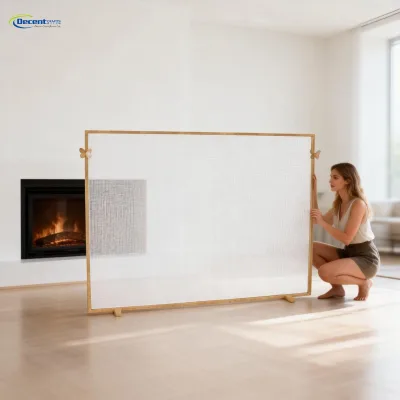
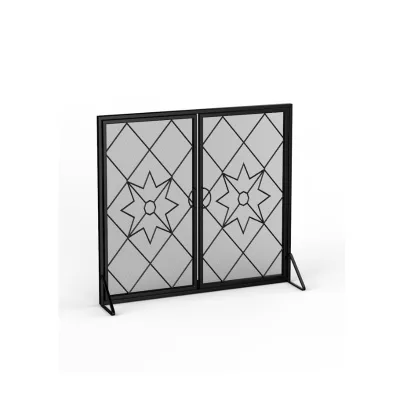
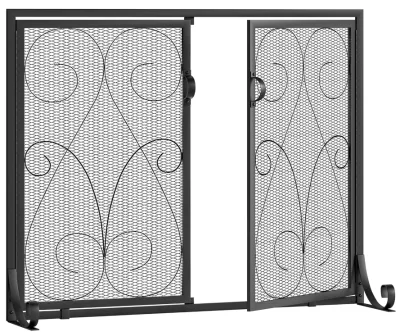
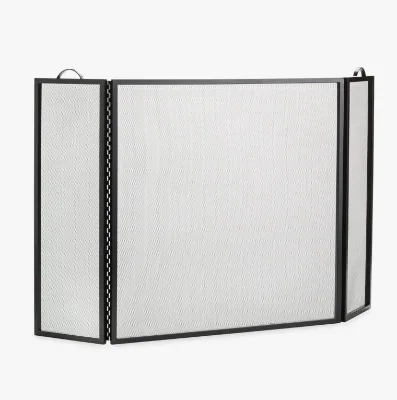
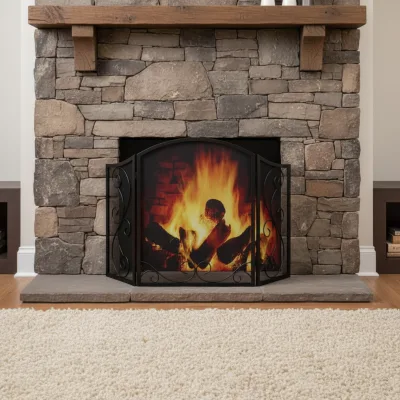
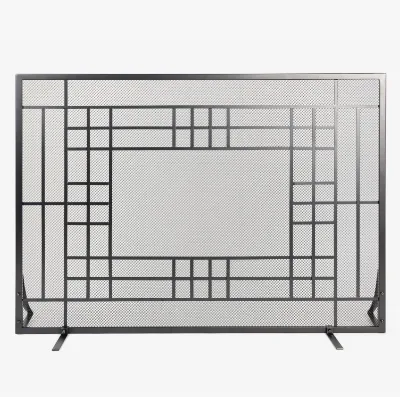
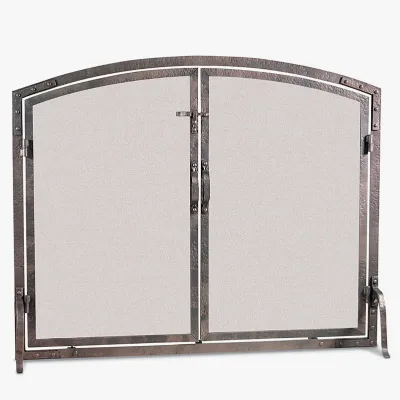
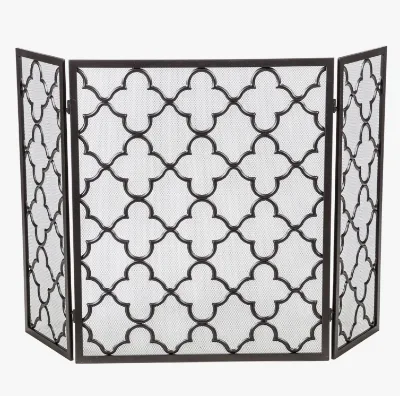
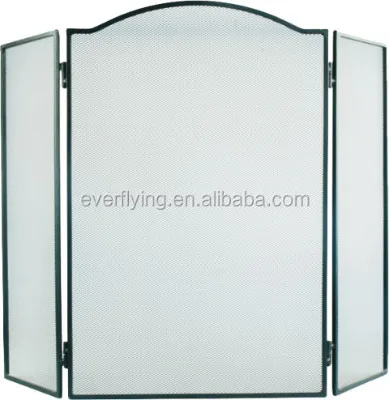
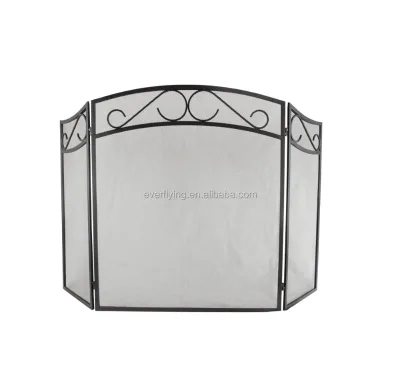
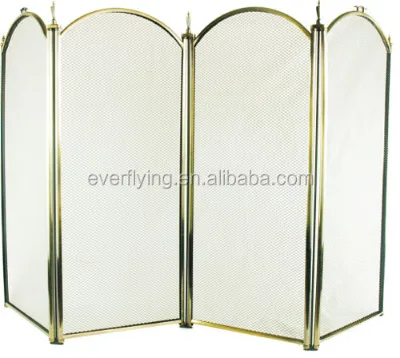


Comprehensive Sourcing Guide
Decorative Fireplace Screen Sourcing Guide
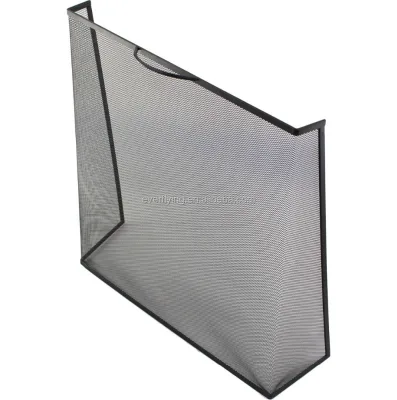
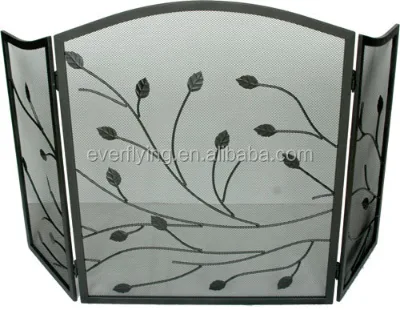
Decorative fireplace screens occupy a distinctive niche in the hearth accessories trade: they combine a functional safety barrier with a visible design statement, which means buyers are sourcing a product where finish quality and dimensional accuracy matter as much as price. This guide is written for importers, retail chains, and project buyers who need to evaluate listings, verify specifications, and structure supplier relationships before committing to volume orders. The category includes freestanding single-panel and multi-panel screens, spark guards for wood-burning stoves, and ornamental frames that coordinate with surround materials such as marble or cast metal.
The guidance below reflects common listing attributes observed in this product family and standard category practice. Where a claim cannot be generalized, the text tells you what to confirm with each prospective supplier rather than asserting a value. Read each section as a decision checkpoint: scope, specification, compliance, cost, supplier qualification, and long-term contract governance. Buyers who work through these checkpoints in order typically reduce sample-round waste and avoid the most common failure modes in decorative metal goods, which are finish defects, packaging damage, and undocumented material substitution.
Product Scope and Observed Listing Signals
Listings in this family span a wide commercial range, with observed prices from budget single screens to premium made-to-order pieces, and MOQs from one piece for sample or trial orders up to 1,000 pieces for mass production. Product types on offer include wood fireplaces and stoves, freestanding screens, and wall-mounted or insert units, in modern and classic styles. Materials cited in listings include stainless steel, general metal, corten steel, and marble for matching surrounds, with black and white as the dominant color options. Model identifiers such as JNBL-FP-3, FP-01, FP02, and EK384 appear, and some standards are described simply as "customed" or with round sizes of 80cm, 100cm, and 120cm.
For buyers, this spread signals a bifurcated market: commodity screens produced against a supplier's standard tooling, and custom mantel or made-to-order work where the supplier designs and produces to the buyer's requestment. Decide early which side of that line your order falls on, because it changes how you evaluate quotations. A listing advertising customization, a stated MOQ of one piece, and free samples with freight paid by the customer is structured for buyer evaluation; a rigid listing with high MOQ and fixed dimensions is not. Match your product scope decision to your channel before requesting quotes.
Technical Specifications to Verify
Dimensional fit is the first specification to lock down. Screens must clear the fireplace opening on all sides, so confirm overall width, height, panel depth, and leg clearance in writing, and reconcile them against the opening dimensions of the fireplaces in your target market. Listings referencing round formats of 80cm, 100cm, and 120cm, or described as "can be customized," indicate that size flexibility exists, but treat every dimension as unverified until it appears on a confirmed drawing. Request a dimensioned drawing with tolerances, not a marketing image, before tooling or sampling begins.
Material and construction details follow. Ask which grade of stainless steel or metal is used, whether corten steel is pre-weathered or supplied raw, and how panels, hinges, mesh, and frame joints are assembled. Verify mesh aperture and wire gauge if spark containment is a stated function, since decorative mesh can prioritize appearance over containment. Confirm finish type and thickness for painted or powder-coated black surfaces, and request physical samples rather than photographs. Finally, clarify whether thermostats, remote controls, or overheating protection are part of the listing, because observed attributes include both "with" and "without" versions of these features, and the presence of an adjustable thermostat only applies to specific models.
Compliance and Safety Documentation
Certification claims in this category vary widely. Some listings carry CE only; others reference a broader set including ETL, GS, RoHS, CSA, and UL. Never assume a screen inherits a certification because it appears in a supplier's profile; ask for the certificate document itself, check that the certificate number and model match the product you are ordering, and confirm the certificate has not expired. If your destination market requires specific marking for screens sold as spark guards or as components of heating appliances, obtain written confirmation from the supplier about which marks apply to your exact model.
Beyond certificates, request the underlying safety rationale. For screens intended to provide a barrier at an open fire or stove, ask what testing, internal or third-party, supports heat resistance and structural stability claims, and whether overheating protection applies to any powered variants in the range. Ask for a RoHS or material declaration covering coatings and solders if you sell into regulated retail channels. Document all of this in the purchase specification so that QC inspections can check conformity, and make certificate availability a condition of order acceptance rather than a post-shipment discussion.
Cost Drivers and Commercial Terms
Observed prices range dramatically, from roughly eight US dollars at the low end to several thousand dollars for large custom pieces, which tells you that material choice, size, and degree of customization dominate cost. Stainless steel and corten steel command premiums over painted general metal; marble surrounds and custom mantel fabrication sit at the top of the range. One listing explicitly markets cost control across every production link, which is a reasonable claim to probe: ask for a cost breakdown separating material, fabrication, finishing, and packaging so you can see where a low price is achieved and where quality risk concentrates.
Commercial terms should be negotiated with the same discipline. MOQs of one piece for trial or sample orders are explicitly offered by some suppliers, so use small initial orders to validate quality before scaling toward 1,000-piece commitments. Observed lead times range from within fifteen days after order confirmation to about forty days for custom work; treat these as supplier-specific claims to confirm in the contract, with delay remedies. Specify packing — wooden crates, wooden boxes, plastic film and foam, or per customer request — as a priced line item, because inadequate packing is a leading cause of transit damage on finished metal goods.
Supplier Qualification and Quality Control
Qualify suppliers on evidence rather than listing polish. One observed listing claims that all workers have more than ten years of experience and that quality is controlled by an experienced QC team; such statements are meaningful only if you can verify them. Request photographs or video of the production floor, ask which processes are in-house versus subcontracted, and check how long the company has exported to your market. Prioritize suppliers whose product origins are disclosed — for example, Hebei, China, appears as a stated origin in this category — and who answer specification questions precisely rather than generically.
Structure quality control into the order itself. Approve a golden sample and retain a sealed reference copy; define acceptable limits for weld spatter, coating thickness, mesh alignment, and dimension before mass production starts. For first orders, commission a third-party inspection at pre-shipment covering quantity, dimensions, finish, and packing against your specification, and tie balance payment to a passing report. Require the supplier's own QC checklist as a document, not a verbal assurance, and review any corrective actions from previous production runs. A supplier unwilling to accept inspection terms is telling you something important before you pay a deposit.
Long-Term Procurement Checks
Once initial orders succeed, shift attention from transaction quality to relationship durability. Reconfirm specifications at every reorder, because customization-heavy suppliers sometimes substitute materials or adjust finishes when input costs move; your purchase contract should state that any deviation requires written approval. Track defect rates by shipment and by model, share the data with the supplier quarterly, and use it to justify price and lead-time improvements at renewal. For custom designs, clarify ownership of tooling and drawings in writing so you can move production if performance deteriorates.
Build resilience into the supply base deliberately. Keep at least one qualified alternate supplier per core screen model, even at low volume, and refresh samples from that alternate annually so the qualification stays current. Monitor regulatory changes in your destination markets that could affect screen labeling or material declarations, and ask suppliers annually for updated certificates and declarations. Finally, review packing and logistics performance after each peak season — damaged-shipment percentages are a leading indicator of a supplier whose quality system is slipping — and schedule a formal annual review covering price, lead time, quality metrics, and any new product development, since many screen suppliers also offer matching fireplace and stove lines worth evaluating.
FAQs
Can I find decorative fireplace screens with CE certification?
Yes, decorative fireplace screens are available with CE certification. Some models also carry ETL, GS, RoHS, CSA, and UL certifications. These products often originate from China and include features like overheating protection and adjustable thermostats for safety and comfort.
What customization options exist for decorative fireplace screens?
Customization is available for decorative fireplace screens, including custom mantels and specific design requests. Manufacturers can produce items based on your requirements, with options for different materials like stainless steel, metal, or marble. Packaging can also be tailored to customer needs.
Which installation types are supported for decorative fireplace screens?
Decorative fireplace screens support freestanding, wall-mounted, and insert installation types. This flexibility allows them to fit various indoor and outdoor settings. Models are available in modern or classic styles, with colors ranging from black to white to match your interior design preferences.
How long is the delivery time for decorative fireplace screens?
Delivery times vary, with some orders shipped within 15 days after confirmation. Other custom orders may take about 40 days to complete. The timeline depends on the specific model, customization level, and production capacity of the manufacturer handling your request.
Can I order a single piece of decorative fireplace screen?
Yes, you can order a single piece as the minimum order quantity is often one piece. Trial and sample orders are welcome, allowing you to test quality before committing to larger volumes. This makes it easy to evaluate the product for your specific needs.
What materials are used for decorative fireplace screens?
Decorative fireplace screens are crafted from stainless steel, metal, and marble. These durable materials ensure longevity and aesthetic appeal. The choice of material often influences the style, whether modern or classic, and determines the overall weight and installation requirements for the unit.
Are decorative fireplace screens suitable for outdoor use?
Yes, many decorative fireplace screens are designed for both indoor and outdoor usage. They feature protections like overheating safeguards and robust construction. This versatility allows them to serve as functional heating elements or decorative accents in various environments, including patios and living rooms.